
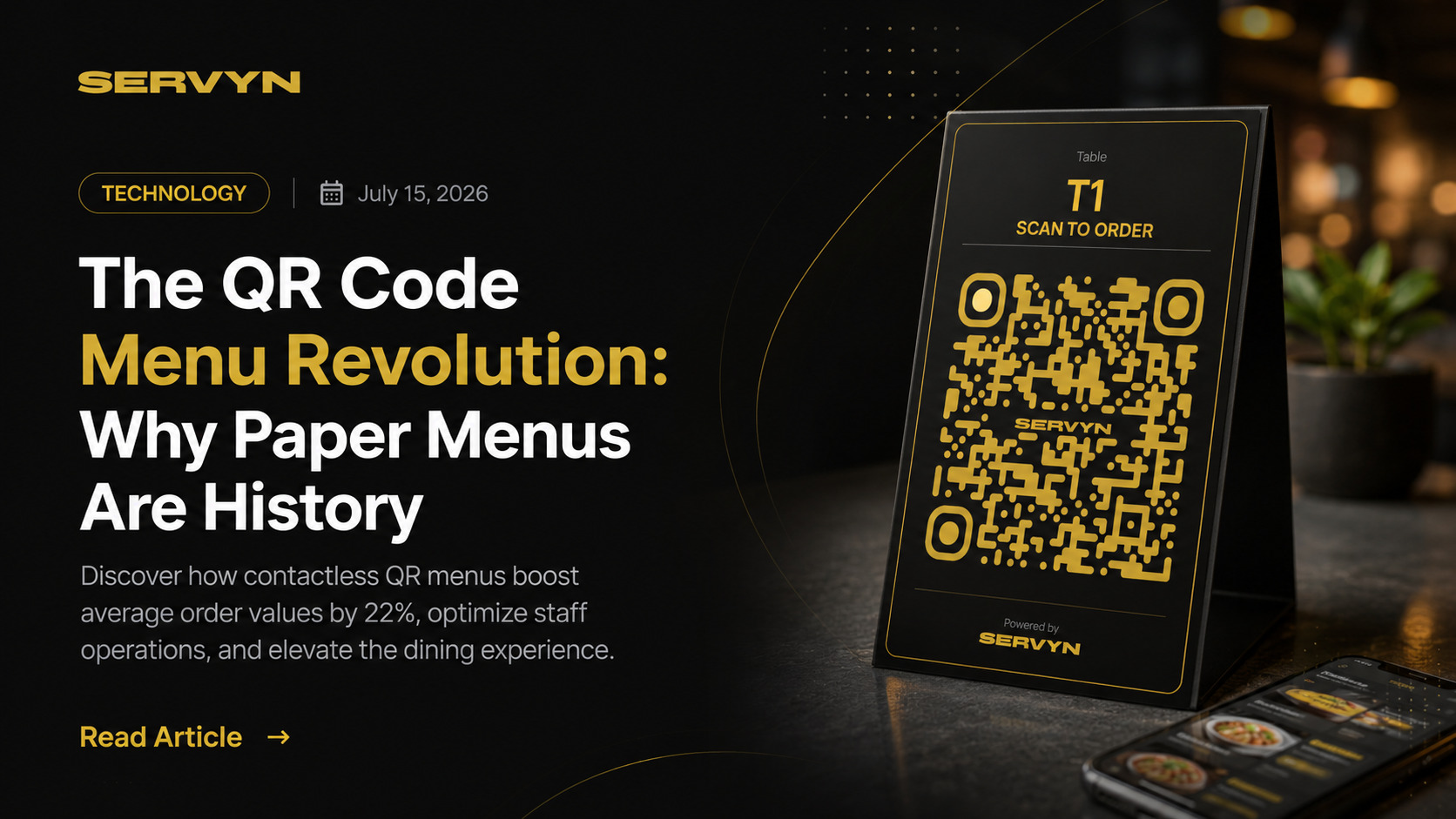
Walk into a modern bistro or cafe today, and you are increasingly likely to find a sleek QR code standee on the table instead of a heavy, laminated paper menu. What started as a pandemic-era safety necessity has transformed into one of the most powerful revenue-driving technologies in the restaurant industry.
Digital menus are no longer just static PDFs hosted on the web. Interactive platforms like Servyn QR Code POS enable customers to browse rich categories, view high-quality photos, filter for dietary restrictions, and place orders directly. Here is why paper menus are rapidly becoming history.
In short: QR code menus raise average order value through built-in upsell prompts, cut labor load by letting guests order without flagging a server, and let you 86 a sold-out dish across every table instantly instead of relying on staff to remember and repeat it.
1. The 22% Boost in Average Order Value
The numbers do not lie. Restaurants adopting interactive QR menus see an average increase of 22% in order size. Why does this happen?
- Menu Psychology at Play: Digital menus never forget to upsell. Check out our Complete Menu Engineering Guide to see how strategic item placement drives margins. When a guest adds a burger, the system dynamically prompts: "Add extra cheddar cheese for ₹50?" or suggests a matching beverage.
- Frictionless Ordering: Guests do not have to catch a waiter's eye to order another round of drinks or a side of fries. They just tap their phone, and the order prints directly in the kitchen.
- Visual Appeal: A high-quality photo of a dessert is infinitely more tempting than text on paper. People eat with their eyes first.
"Since implementing Servyn QR ordering, our table turn time dropped by 14 minutes, and our beverage sales increased by nearly 30% because guests could order instantly."
2. Operational Efficiency & Labor Relief
Staff shortages and rising labor costs are major challenges for modern restaurants. QR ordering does not replace human hospitality; rather, it frees up servers from administrative tasks so they can focus on delivering exceptional service and food. Explore our Table-Side Checkout Guide for a deep dive into rush-hour efficiency.
With table ordering, a smaller floor staff can manage more tables comfortably without sacrificing service quality. Order modifications are selected by the guest directly, eliminating transcription errors that lead to wasted food and disgruntled diners.
3. Real-Time Menu Flexibility
If you run out of your signature ribeye steak or popular curry at 8:00 PM on a busy Friday, a paper menu forces servers to repeatedly apologize to guests when they try to order it. With a digital menu system, the kitchen staff can toggle the item to "Sold Out" in the POS, and it instantly disappears or shows as unavailable on all active customer phones.
Prices can also be adjusted dynamically for happy hours or special events without the expensive and wasteful process of reprinting paper menus. View our transparent Servyn Pricing & Early Access options to get started for free.
Conclusion: Meeting Modern Guest Expectations
Today's diners expect speed, personalization, and convenience. By offering a hybrid approach—where guests scan and order via QR code while staff deliver food and check on customer satisfaction—restaurants can offer the best of both worlds. The paper menu served its purpose, but the future of dining is digital and interactive.